Tobacco attracts predators with chemicals in response to caterpillars, a study finds

">
Tobacco attracts predators with chemicals in response to caterpillars, a study finds

Monday, August 30, 2010

Ian Baldwin, of the Max Planck Institute for Chemical Ecology in Jena, Germany, and colleagues have discovered a multi-step protective mechanism of tobacco plants against Manduca sexta caterpillars. In response to a chemical in the caterpillars’ larvae, the plants release an odorous substance into air to attract another species of insects, called “big-eyed bugs” (Geocoris). These carnivores come to the scene and attack the caterpillars. The response is triggered within 24 hours, which is a relatively short period of time. The discovery occurred as a result of field studies in a nature preserve in southwestern Utah.

The phenomenon starts with the recognition of the caterpillars by the plant. As a PhD student in the Department of Molecular Ecology Silke Allmann explained, “The plant cannot see its attacker, but plants can sense the digestive substances that attacking larvae have in their oral secretions when these substances come into contact with the leaves.” To test that, the scientists coated some of caterpillars’ eggs on two groups of tobacco plants and glued them. On one of the groups, the glue was mixed with caterpillars’ split. The latter got more attention of the attackers, getting 25% of eggs destroyed against 8% for the other group.

Allmann supposed that “The simplest assumption is that the larval oral secretions contain a special enzyme, probably an isomerase, which rearranges the Z:E ratio of the aldehyde in favor of (E)-2-hexenal.” The researchers heated the oral secretion to destroy the enzyme, and applied it to wounded leaves. No plant response related to the studied process was observed, confirming the hypothesis.

(E)-2-hexenal is a strong antibiotic agent. The food consumed by a caterpillar typically includes hundreds of microorganisms together with leaf tissue, which are mostly unneeded and killed by the above-mentioned substance quickly. Because of this important role of this substance, the caterpillars can’t change their metabolism easily enough to prevent the subsequent events from happening.

To find out what happens after a caterpillar’s presence is noted by the plant, Silke Allmann, a graduate student in Baldwin’s group, examined the green leafy volatiles (GLVs), the substances responsible for the smell of fresh-cut plant parts. These substances are released into air if a plant is damaged. As the study released, the tobacco plant GLVs typically have a major share of Z isomers with very small amount of E isomers present. But the shares are distributed equally during a caterpillar attack. In a study with varying amount of different isomers present, E isomers turned out to be the ones attracting the predators to come to the scene and to attack the caterpillars.

What is surprising, Silke Allmann found that the caterpillars are the direct stimulus of this change: caterpillar saliva converts the Z-isomers of the GLV molecules to E-isomers. Prof. Ian Baldwin commented, “That’s where it got really weird. Why would a caterpillar do this to itself?” He suggested that the E-GLVs could have anti-biotic effect in the caterpillar’s digestive system.

The speed of the triggered reaction is relatively fast, it taking about one hour for the GLV isomers ratio change, and about 24 hours for the predators to be attracted by the substance released into the air. As Prof. Ian Baldwin, who was leading the research, said, “Other indirect defense mechanisms of plants require the activation of new metabolic pathways for the release of odorant signals, and these responses are much slower.”

The multi-step intricate approach involved is attracting the attention of scientists, who are looking forward to its application in agriculture. Baldwin noted that “in effect, the caterpillar calls the police on itself”, and suggested to genetically modify crops to release similar signals to defend themselves against pests.

Retrieved from “https://en.wikinews.org/w/index.php?title=Tobacco_attracts_predators_with_chemicals_in_response_to_caterpillars,_a_study_finds&oldid=2318499”

Understanding The Mortgage Loan Modification Process

By Simon Volkov

Mortgage loan modification is a home-saving strategy available to borrowers who have defaulted on loan payments or those facing financial challenges that could lead to foreclosure. Banks can reduce interest rates, extend loan terms, or reduce mortgage principal.

The mortgage loan modification process can take months to complete. Borrowers who have entered into preforeclosure must become extremely proactive in attempting to work out a modified loan. Borrowers who are not in preforeclosure, but struggling to meet loan obligations may find obtaining a loan modification nearly impossible until they default on their loan.

The first step of negotiating begins by contacting the bank’s loss mitigation department. This is often a frustrating experience because borrowers normally must place multiple phone calls to talk with a human being. The key to success is patience and persistence.

Bank loss mitigation oversees all transactions related to delinquent mortgage loans. These include deferred payments, mortgage forbearance, loan modification, mortgage refinance, foreclosure, deed in lieu of foreclosure, and real estate short sales.

[youtube]http://www.youtube.com/watch?v=aq7MDFJIgw0[/youtube]

Next, borrowers present a ‘Request for Modification and Affidavit’ (RMA) to the bank. RMA forms are available at no charge at MakingHomeAffordable.gov, along with tax return authorization forms and income verification worksheets.

Borrowers provide an IRS 4506-T-EZ form which authorizes lenders to obtain a transcript copy of the most recent tax return. Required income verification documents depend on if borrowers are employees or self-employed; if they receive government assistance, pension, or unemployment benefits; and if they depend on child support or spousal alimony to maintain mortgage payments.

Once these documents are provided to lenders, most will request a loan modification hardship letter outlining circumstances that led to financial hardships. Hardship letters should be concise while including sufficient details. Borrowers who have engaged in activities to reduce expenses should include actions taken in their letter of hardship. Banks tend to appreciate borrowers who are being proactive in resolving financial problems.

Bank loss mitigators review financial information and loan documents to determine if a loan modification is the most viable option. If so, they will work with borrowers throughout the process. If not, banks may offer additional remedies such as real estate short sales or deed in lieu of foreclosure.

Making Home Affordable is a government-sponsored entity that can be invaluable to borrowers. In addition to providing required forms, visitors can also locate information and resources that can expedite the process of applying for a mortgage loan modification.

Mortgagors can enter information into mortgage calculators to determine if they meet loan modification criteria; locate HUD housing counselors; and research foreclosure prevention programs.

It is important to note that more than 50-percent of borrowers who enter into mortgage loan modification default on their agreement within the first year. The Office of Thrift Supervision reports default occurs because borrowers do not have sufficient income to remain current with loan installments, or because lenders or borrowers do not complete required paperwork.

When mortgagors receive loan modification approval they must be proactive in remitting payments in full and on time. Borrowers who fail out of loan modification programs will have limited options available to stop foreclosure.

Borrowers facing financial hardship and unable to achieve desirable results with their lender should consult with a HUD housing counselor. These trained professionals can assist borrowers and help determine if a mortgage loan modification is the best option or if other foreclosure prevention strategies should be explored.

About the Author: Understanding the mortgage loan modification process is essential for achieving a successful outcome. California real estate investor, Simon Volkov shares a comprehensive foreclosure prevention article library to help borrowers make informed decisions at SimonVolkov.com.

Source: isnare.com

Permanent Link: isnare.com/?aid=678169&ca=Real+Estate

U.K. National Portrait Gallery threatens U.S. citizen with legal action over Wikimedia images

">
U.K. National Portrait Gallery threatens U.S. citizen with legal action over Wikimedia images

Tuesday, July 14, 2009

This article mentions the Wikimedia Foundation, one of its projects, or people related to it. Wikinews is a project of the Wikimedia Foundation.

The English National Portrait Gallery (NPG) in London has threatened on Friday to sue a U.S. citizen, Derrick Coetzee. The legal letter followed claims that he had breached the Gallery’s copyright in several thousand photographs of works of art uploaded to the Wikimedia Commons, a free online media repository.

In a letter from their solicitors sent to Coetzee via electronic mail, the NPG asserted that it holds copyright in the photographs under U.K. law, and demanded that Coetzee provide various undertakings and remove all of the images from the site (referred to in the letter as “the Wikipedia website”).

Wikimedia Commons is a repository of free-to-use media, run by a community of volunteers from around the world, and is a sister project to Wikinews and the encyclopedia Wikipedia. Coetzee, who contributes to the Commons using the account “Dcoetzee”, had uploaded images that are free for public use under United States law, where he and the website are based. However copyright is claimed to exist in the country where the gallery is situated.

The complaint by the NPG is that under UK law, its copyright in the photographs of its portraits is being violated. While the gallery has complained to the Wikimedia Foundation for a number of years, this is the first direct threat of legal action made against an actual uploader of images. In addition to the allegation that Coetzee had violated the NPG’s copyright, they also allege that Coetzee had, by uploading thousands of images in bulk, infringed the NPG’s database right, breached a contract with the NPG; and circumvented a copyright protection mechanism on the NPG’s web site.

The copyright protection mechanism referred to is Zoomify, a product of Zoomify, Inc. of Santa Cruz, California. NPG’s solicitors stated in their letter that “Our client used the Zoomify technology to protect our client’s copyright in the high resolution images.”. Zoomify Inc. states in the Zoomify support documentation that its product is intended to make copying of images “more difficult” by breaking the image into smaller pieces and disabling the option within many web browsers to click and save images, but that they “provide Zoomify as a viewing solution and not an image security system”.

In particular, Zoomify’s website comments that while “many customers — famous museums for example” use Zoomify, in their experience a “general consensus” seems to exist that most museums are concerned with making the images in their galleries accessible to the public, rather than preventing the public from accessing them or making copies; they observe that a desire to prevent high resolution images being distributed would also imply prohibiting the sale of any posters or production of high quality printed material that could be scanned and placed online.

Other actions in the past have come directly from the NPG, rather than via solicitors. For example, several edits have been made directly to the English-language Wikipedia from the IP address 217.207.85.50, one of sixteen such IP addresses assigned to computers at the NPG by its ISP, Easynet.

In the period from August 2005 to July 2006 an individual within the NPG using that IP address acted to remove the use of several Wikimedia Commons pictures from articles in Wikipedia, including removing an image of the Chandos portrait, which the NPG has had in its possession since 1856, from Wikipedia’s biographical article on William Shakespeare.

Other actions included adding notices to the pages for images, and to the text of several articles using those images, such as the following edit to Wikipedia’s article on Catherine of Braganza and to its page for the Wikipedia Commons image of Branwell Brontë‘s portrait of his sisters:

“THIS IMAGE IS BEING USED WITHOUT PERMISSION FROM THE COPYRIGHT HOLDER.”
“This image is copyright material and must not be reproduced in any way without permission of the copyright holder. Under current UK copyright law, there is copyright in skilfully executed photographs of ex-copyright works, such as this painting of Catherine de Braganza.
The original painting belongs to the National Portrait Gallery, London. For copies, and permission to reproduce the image, please contact the Gallery at picturelibrary@npg.org.uk or via our website at www.npg.org.uk”

Other, later, edits, made on the day that NPG’s solicitors contacted Coetzee and drawn to the NPG’s attention by Wikinews, are currently the subject of an internal investigation within the NPG.

Coetzee published the contents of the letter on Saturday July 11, the letter itself being dated the previous day. It had been sent electronically to an email address associated with his Wikimedia Commons user account. The NPG’s solicitors had mailed the letter from an account in the name “Amisquitta”. This account was blocked shortly after by a user with access to the user blocking tool, citing a long standing Wikipedia policy that the making of legal threats and creation of a hostile environment is generally inconsistent with editing access and is an inappropriate means of resolving user disputes.

The policy, initially created on Commons’ sister website in June 2004, is also intended to protect all parties involved in a legal dispute, by ensuring that their legal communications go through proper channels, and not through a wiki that is open to editing by other members of the public. It was originally formulated primarily to address legal action for libel. In October 2004 it was noted that there was “no consensus” whether legal threats related to copyright infringement would be covered but by the end of 2006 the policy had reached a consensus that such threats (as opposed to polite complaints) were not compatible with editing access while a legal matter was unresolved. Commons’ own website states that “[accounts] used primarily to create a hostile environment for another user may be blocked”.

In a further response, Gregory Maxwell, a volunteer administrator on Wikimedia Commons, made a formal request to the editorial community that Coetzee’s access to administrator tools on Commons should be revoked due to the prevailing circumstances. Maxwell noted that Coetzee “[did] not have the technically ability to permanently delete images”, but stated that Coetzee’s potential legal situation created a conflict of interest.

Sixteen minutes after Maxwell’s request, Coetzee’s “administrator” privileges were removed by a user in response to the request. Coetzee retains “administrator” privileges on the English-language Wikipedia, since none of the images exist on Wikipedia’s own website and therefore no conflict of interest exists on that site.

Legally, the central issue upon which the case depends is that copyright laws vary between countries. Under United States case law, where both the website and Coetzee are located, a photograph of a non-copyrighted two-dimensional picture (such as a very old portrait) is not capable of being copyrighted, and it may be freely distributed and used by anyone. Under UK law that point has not yet been decided, and the Gallery’s solicitors state that such photographs could potentially be subject to copyright in that country.

One major legal point upon which a case would hinge, should the NPG proceed to court, is a question of originality. The U.K.’s Copyright, Designs and Patents Act 1988 defines in ¶ 1(a) that copyright is a right that subsists in “original literary, dramatic, musical or artistic works” (emphasis added). The legal concept of originality here involves the simple origination of a work from an author, and does not include the notions of novelty or innovation that is often associated with the non-legal meaning of the word.

Whether an exact photographic reproduction of a work is an original work will be a point at issue. The NPG asserts that an exact photographic reproduction of a copyrighted work in another medium constitutes an original work, and this would be the basis for its action against Coetzee. This view has some support in U.K. case law. The decision of Walter v Lane held that exact transcriptions of speeches by journalists, in shorthand on reporter’s notepads, were original works, and thus copyrightable in themselves. The opinion by Hugh Laddie, Justice Laddie, in his book The Modern Law of Copyright, points out that photographs lie on a continuum, and that photographs can be simple copies, derivative works, or original works:

“[…] it is submitted that a person who makes a photograph merely by placing a drawing or painting on the glass of a photocopying machine and pressing the button gets no copyright at all; but he might get a copyright if he employed skill and labour in assembling the thing to be photocopied, as where he made a montage.”

Various aspects of this continuum have already been explored in the courts. Justice Neuberger, in the decision at Antiquesportfolio.com v Rodney Fitch & Co. held that a photograph of a three-dimensional object would be copyrightable if some exercise of judgement of the photographer in matters of angle, lighting, film speed, and focus were involved. That exercise would create an original work. Justice Oliver similarly held, in Interlego v Tyco Industries, that “[i]t takes great skill, judgement and labour to produce a good copy by painting or to produce an enlarged photograph from a positive print, but no-one would reasonably contend that the copy, painting, or enlargement was an ‘original’ artistic work in which the copier is entitled to claim copyright. Skill, labour or judgement merely in the process of copying cannot confer originality.”.

In 2000 the Museums Copyright Group, a copyright lobbying group, commissioned a report and legal opinion on the implications of the Bridgeman case for the UK, which stated:

“Revenue raised from reproduction fees and licensing is vital to museums to support their primary educational and curatorial objectives. Museums also rely on copyright in photographs of works of art to protect their collections from inaccurate reproduction and captioning… as a matter of principle, a photograph of an artistic work can qualify for copyright protection in English law”. The report concluded by advocating that “museums must continue to lobby” to protect their interests, to prevent inferior quality images of their collections being distributed, and “not least to protect a vital source of income”.

Several people and organizations in the U.K. have been awaiting a test case that directly addresses the issue of copyrightability of exact photographic reproductions of works in other media. The commonly cited legal case Bridgeman Art Library v. Corel Corp. found that there is no originality where the aim and the result is a faithful and exact reproduction of the original work. The case was heard twice in New York, once applying UK law and once applying US law. It cited the prior UK case of Interlego v Tyco Industries (1988) in which Lord Oliver stated that “Skill, labour or judgement merely in the process of copying cannot confer originality.”

“What is important about a drawing is what is visually significant and the re-drawing of an existing drawing […] does not make it an original artistic work, however much labour and skill may have gone into the process of reproduction […]”

The Interlego judgement had itself drawn upon another UK case two years earlier, Coca-Cola Go’s Applications, in which the House of Lords drew attention to the “undesirability” of plaintiffs seeking to expand intellectual property law beyond the purpose of its creation in order to create an “undeserving monopoly”. It commented on this, that “To accord an independent artistic copyright to every such reproduction would be to enable the period of artistic copyright in what is, essentially, the same work to be extended indefinitely… ”

The Bridgeman case concluded that whether under UK or US law, such reproductions of copyright-expired material were not capable of being copyrighted.

The unsuccessful plaintiff, Bridgeman Art Library, stated in 2006 in written evidence to the House of Commons Committee on Culture, Media and Sport that it was “looking for a similar test case in the U.K. or Europe to fight which would strengthen our position”.

The National Portrait Gallery is a non-departmental public body based in London England and sponsored by the Department for Culture, Media and Sport. Founded in 1856, it houses a collection of portraits of historically important and famous British people. The gallery contains more than 11,000 portraits and 7,000 light-sensitive works in its Primary Collection, 320,000 in the Reference Collection, over 200,000 pictures and negatives in the Photographs Collection and a library of around 35,000 books and manuscripts. (More on the National Portrait Gallery here)

The gallery’s solicitors are Farrer & Co LLP, of London. Farrer’s clients have notably included the British Royal Family, in a case related to extracts from letters sent by Diana, Princess of Wales which were published in a book by ex-butler Paul Burrell. (In that case, the claim was deemed unlikely to succeed, as the extracts were not likely to be in breach of copyright law.)

Farrer & Co have close ties with industry interest groups related to copyright law. Peter Wienand, Head of Intellectual Property at Farrer & Co., is a member of the Executive body of the Museums Copyright Group, which is chaired by Tom Morgan, Head of Rights and Reproductions at the National Portrait Gallery. The Museums Copyright Group acts as a lobbying organization for “the interests and activities of museums and galleries in the area of [intellectual property rights]”, which reacted strongly against the Bridgeman Art Library v. Corel Corp. case.

Wikimedia Commons is a repository of images, media, and other material free for use by anyone in the world. It is operated by a community of 21,000 active volunteers, with specialist rights such as deletion and blocking restricted to around 270 experienced users in the community (known as “administrators”) who are trusted by the community to use them to enact the wishes and policies of the community. Commons is hosted by the Wikimedia Foundation, a charitable body whose mission is to make available free knowledge and historic and other material which is legally distributable under US law. (More on Commons here)

The legal threat also sparked discussions of moral issues and issues of public policy in several Internet discussion fora, including Slashdot, over the weekend. One major public policy issue relates to how the public domain should be preserved.

Some of the public policy debate over the weekend has echoed earlier opinions presented by Kenneth Hamma, the executive director for Digital Policy at the J. Paul Getty Trust. Writing in D-Lib Magazine in November 2005, Hamma observed:

“Art museums and many other collecting institutions in this country hold a trove of public-domain works of art. These are works whose age precludes continued protection under copyright law. The works are the result of and evidence for human creativity over thousands of years, an activity museums celebrate by their very existence. For reasons that seem too frequently unexamined, many museums erect barriers that contribute to keeping quality images of public domain works out of the hands of the general public, of educators, and of the general milieu of creativity. In restricting access, art museums effectively take a stand against the creativity they otherwise celebrate. This conflict arises as a result of the widely accepted practice of asserting rights in the images that the museums make of the public domain works of art in their collections.”

He also stated:

“This resistance to free and unfettered access may well result from a seemingly well-grounded concern: many museums assume that an important part of their core business is the acquisition and management of rights in art works to maximum return on investment. That might be true in the case of the recording industry, but it should not be true for nonprofit institutions holding public domain art works; it is not even their secondary business. Indeed, restricting access seems all the more inappropriate when measured against a museum’s mission — a responsibility to provide public access. Their charitable, financial, and tax-exempt status demands such. The assertion of rights in public domain works of art — images that at their best closely replicate the values of the original work — differs in almost every way from the rights managed by the recording industry. Because museums and other similar collecting institutions are part of the private nonprofit sector, the obligation to treat assets as held in public trust should replace the for-profit goal. To do otherwise, undermines the very nature of what such institutions were created to do.”

Hamma observed in 2005 that “[w]hile examples of museums chasing down digital image miscreants are rare to non-existent, the expectation that museums might do so has had a stultifying effect on the development of digital image libraries for teaching and research.”

The NPG, which has been taking action with respect to these images since at least 2005, is a public body. It was established by Act of Parliament, the current Act being the Museums and Galleries Act 1992. In that Act, the NPG Board of Trustees is charged with maintaining “a collection of portraits of the most eminent persons in British history, of other works of art relevant to portraiture and of documents relating to those portraits and other works of art”. It also has the tasks of “secur[ing] that the portraits are exhibited to the public” and “generally promot[ing] the public’s enjoyment and understanding of portraiture of British persons and British history through portraiture both by means of the Board’s collection and by such other means as they consider appropriate”.

Several commentators have questioned how the NPG’s statutory goals align with its threat of legal action. Mike Masnick, founder of Techdirt, asked “The people who run the Gallery should be ashamed of themselves. They ought to go back and read their own mission statement[. …] How, exactly, does suing someone for getting those portraits more attention achieve that goal?” (external link Masnick’s). L. Sutherland of Bigmouthmedia asked “As the paintings of the NPG technically belong to the nation, does that mean that they should also belong to anyone that has access to a computer?”

Other public policy debates that have been sparked have included the applicability of U.K. courts, and U.K. law, to the actions of a U.S. citizen, residing in the U.S., uploading files to servers hosted in the U.S.. Two major schools of thought have emerged. Both see the issue as encroachment of one legal system upon another. But they differ as to which system is encroaching. One view is that the free culture movement is attempting to impose the values and laws of the U.S. legal system, including its case law such as Bridgeman Art Library v. Corel Corp., upon the rest of the world. Another view is that a U.K. institution is attempting to control, through legal action, the actions of a U.S. citizen on U.S. soil.

David Gerard, former Press Officer for Wikimedia UK, the U.K. chapter of the Wikimedia Foundation, which has been involved with the “Wikipedia Loves Art” contest to create free content photographs of exhibits at the Victoria and Albert Museum, stated on Slashdot that “The NPG actually acknowledges in their letter that the poster’s actions were entirely legal in America, and that they’re making a threat just because they think they can. The Wikimedia community and the WMF are absolutely on the side of these public domain images remaining in the public domain. The NPG will be getting radioactive publicity from this. Imagine the NPG being known to American tourists as somewhere that sues Americans just because it thinks it can.”

Benjamin Crowell, a physics teacher at Fullerton College in California, stated that he had received a letter from the Copyright Officer at the NPG in 2004, with respect to the picture of the portrait of Isaac Newton used in his physics textbooks, that he publishes in the U.S. under a free content copyright licence, to which he had replied with a pointer to Bridgeman Art Library v. Corel Corp..

The Wikimedia Foundation takes a similar stance. Erik Möller, the Deputy Director of the US-based Wikimedia Foundation wrote in 2008 that “we’ve consistently held that faithful reproductions of two-dimensional public domain works which are nothing more than reproductions should be considered public domain for licensing purposes”.

Contacted over the weekend, the NPG issued a statement to Wikinews:

“The National Portrait Gallery is very strongly committed to giving access to its Collection. In the past five years the Gallery has spent around £1 million digitising its Collection to make it widely available for study and enjoyment. We have so far made available on our website more than 60,000 digital images, which have attracted millions of users, and we believe this extensive programme is of great public benefit.
“The Gallery supports Wikipedia in its aim of making knowledge widely available and we would be happy for the site to use our low-resolution images, sufficient for most forms of public access, subject to safeguards. However, in March 2009 over 3000 high-resolution files were appropriated from the National Portrait Gallery website and published on Wikipedia without permission.
“The Gallery is very concerned that potential loss of licensing income from the high-resolution files threatens its ability to reinvest in its digitisation programme and so make further images available. It is one of the Gallery’s primary purposes to make as much of the Collection available as possible for the public to view.
“Digitisation involves huge costs including research, cataloguing, conservation and highly-skilled photography. Images then need to be made available on the Gallery website as part of a structured and authoritative database. To date, Wikipedia has not responded to our requests to discuss the issue and so the National Portrait Gallery has been obliged to issue a lawyer’s letter. The Gallery remains willing to enter into a dialogue with Wikipedia.

In fact, Matthew Bailey, the Gallery’s (then) Assistant Picture Library Manager, had already once been in a similar dialogue. Ryan Kaldari, an amateur photographer from Nashville, Tennessee, who also volunteers at the Wikimedia Commons, states that he was in correspondence with Bailey in October 2006. In that correspondence, according to Kaldari, he and Bailey failed to conclude any arrangement.

Jay Walsh, the Head of Communications for the Wikimedia Foundation, which hosts the Commons, called the gallery’s actions “unfortunate” in the Foundation’s statement, issued on Tuesday July 14:

“The mission of the Wikimedia Foundation is to empower and engage people around the world to collect and develop educational content under a free license or in the public domain, and to disseminate it effectively and globally. To that end, we have very productive working relationships with a number of galleries, archives, museums and libraries around the world, who join with us to make their educational materials available to the public.
“The Wikimedia Foundation does not control user behavior, nor have we reviewed every action taken by that user. Nonetheless, it is our general understanding that the user in question has behaved in accordance with our mission, with the general goal of making public domain materials available via our Wikimedia Commons project, and in accordance with applicable law.”

The Foundation added in its statement that as far as it was aware, the NPG had not attempted “constructive dialogue”, and that the volunteer community was presently discussing the matter independently.

In part, the lack of past agreement may have been because of a misunderstanding by the National Portrait Gallery of Commons and Wikipedia’s free content mandate; and of the differences between Wikipedia, the Wikimedia Foundation, the Wikimedia Commons, and the individual volunteer workers who participate on the various projects supported by the Foundation.

Like Coetzee, Ryan Kaldari is a volunteer worker who does not represent Wikipedia or the Wikimedia Commons. (Such representation is impossible. Both Wikipedia and the Commons are endeavours supported by the Wikimedia Foundation, and not organizations in themselves.) Nor, again like Coetzee, does he represent the Wikimedia Foundation.

Kaldari states that he explained the free content mandate to Bailey. Bailey had, according to copies of his messages provided by Kaldari, offered content to Wikipedia (naming as an example the photograph of John Opie‘s 1797 portrait of Mary Wollstonecraft, whose copyright term has since expired) but on condition that it not be free content, but would be subject to restrictions on its distribution that would have made it impossible to use by any of the many organizations that make use of Wikipedia articles and the Commons repository, in the way that their site-wide “usable by anyone” licences ensures.

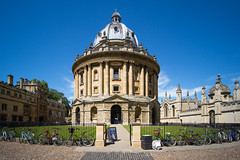
The proposed restrictions would have also made it impossible to host the images on Wikimedia Commons. The image of the National Portrait Gallery in this article, above, is one such free content image; it was provided and uploaded to the Wikimedia Commons under the terms of the GNU Free Documentation Licence, and is thus able to be used and republished not only on Wikipedia but also on Wikinews, on other Wikimedia Foundation projects, as well as by anyone in the world, subject to the terms of the GFDL, a license that guarantees attribution is provided to the creators of the image.

As Commons has grown, many other organizations have come to different arrangements with volunteers who work at the Wikimedia Commons and at Wikipedia. For example, in February 2009, fifteen international museums including the Brooklyn Museum and the Victoria and Albert Museum established a month-long competition where users were invited to visit in small teams and take high quality photographs of their non-copyright paintings and other exhibits, for upload to Wikimedia Commons and similar websites (with restrictions as to equipment, required in order to conserve the exhibits), as part of the “Wikipedia Loves Art” contest.

Approached for comment by Wikinews, Jim Killock, the executive director of the Open Rights Group, said “It’s pretty clear that these images themselves should be in the public domain. There is a clear public interest in making sure paintings and other works are usable by anyone once their term of copyright expires. This is what US courts have recognised, whatever the situation in UK law.”

The Digital Britain report, issued by the U.K.’s Department for Culture, Media, and Sport in June 2009, stated that “Public cultural institutions like Tate, the Royal Opera House, the RSC, the Film Council and many other museums, libraries, archives and galleries around the country now reach a wider public online.” Culture minster Ben Bradshaw was also approached by Wikinews for comment on the public policy issues surrounding the on-line availability of works in the public domain held in galleries, re-raised by the NPG’s threat of legal action, but had not responded by publication time.

Retrieved from “https://en.wikinews.org/w/index.php?title=U.K._National_Portrait_Gallery_threatens_U.S._citizen_with_legal_action_over_Wikimedia_images&oldid=4379037”

Taylor Swift’s 1989 wins Grammy’s Record of the year; Bad Blood wins the Best Music Video

">
Taylor Swift’s 1989 wins Grammy’s Record of the year; Bad Blood wins the Best Music Video

On Monday, US singer Taylor Swift won the 58th Grammy Awards Album of the Year for her album 1989, and her video song Bad Blood won the Grammy Award for the Best Music Video.

There will be people who will try to undercut your success

This was the second time Swift has won the award for the Album of the Year. She previously won for her album Fearless in 2010. Swift collected three Grammys at this year’s awards ceremony: Best Music Video, Best Pop Vocal Album and Album of the Year.

With this Album of the Year win, she became the first woman to win two Grammy Awards in the category. At the beginning of the award ceremony, Swift performed her song Out of the Woods live.

The other nominees for the Album of The Year were Alabama Shakes’ Sound & Color, Kendrick Lamar’s To Pimp a Butterfly, Chris Stapleton’s Traveller, and The Weeknd’s Beauty Behind the Madness. Canadian singer The Weeknd won two awards for Best Urban Contemporary Album and Best R&B Performance.

While receiving her award, Swift left a message for younger women saying “there will be people along the way who will try to undercut your success or take credit for your accomplishments […] don’t let those people sidetrack you, someday when you get where you’re going you’ll look around and you’ll know that it was you and the people who love you who put you there, and that will be the greatest feeling in the world.”

Kendrick Lamar, who featured in the Bad Blood video, won five awards including for Bad Blood. Swift’s friend Ed Sheeran won the Song of the Year for Thinking Out Loud ahead of her song Blank Space from the album 1989.

Retrieved from “https://en.wikinews.org/w/index.php?title=Taylor_Swift%27s_1989_wins_Grammy%27s_Record_of_the_year;_Bad_Blood_wins_the_Best_Music_Video&oldid=4619219”

Revealing 3 Sure Shot Workplace Trends For The Decade

Clearly, the way organisations work has changed in the past decade to a shockingly great extent. This drastic change came across as a result of a series of changes. Realising the true value of employees, automating the business functions to save time are the most apparent ones.

To say the least, it was easy earlier to manage the workforce as the employees’ say was overlooked and the policies were rigid. As time passed and the needs of the employees started drawing more and more attention, policies started becoming more and more flexible and employees happier. Hence, as we have now entered a new decade, the future of work starts to look a lot more different in terms of culture and trends. And so, we thought of predicting a few of the workplace trends that we might witness round the year.

Employee wellness-The health of your employees directly impacts the health of your business. If you want to mushroom your business rapidly, you must take care of the health of your workforce. The definition of health is now not just limited to physical health but mental and emotional health as well. Various professional and personal factors influence the health of individuals. This is why it is necessary for you to expand the idea of health benefits to mental health checkups, and therapists.

[youtube]http://www.youtube.com/watch?v=65TqBtHLPpQ[/youtube]

2020 will be the year for companies to begin their actions in this direction. They will start factoring this as well in thepayroll software in India while configuring the CTC.

Employee experience-The percentage of millennials and Gen Z is increasing in most of the industries. And they want the policies, culture and space to be more and more flexible and comforting. Not only do they prefer to work from home on the days they feel lazy but also want the work desk to be flexible. Nothing should make them feel restricted. Hence, this decade and not just 2020 will become more and more about the employees, their demands, expectations, likings, dislikings and more. All of this would be done with the aim to keep the retention rate high, the attrition rate low and the hiring costs minimal. We can also expect a feature in the HR and payroll software that allows the employees to leave suggestions, and rate company anonymously.

More diversity and inclusion-Upholding values, becoming more and more socially responsible is the key to attracting great employees, making them proud of working with you and making them stick to you. So, the companies in this decade will try to keep the gender ration in check, be more welcoming towards the LGBTQ community and not differentiate amongst people on the basis of age, caste, disability or status.

Another workplace trend that we cannot miss is the rising culture of the gig economy. This economy is inclined more and more towards hiring people as freelancers. This progressively rising economic culture is going to be on the rise in this decade as it will cut a lot of costs for the company and thus help them save a lot of money. For instance, sometimes you may have a requirement for more designers but not always. So, to cope up with times like these, companies will increasingly start leveraging the gig economy. This means that when there is more work, they can avail the services of the freelancer, pay him for the time he has worked. A lot of money and office space of the company is saved this way.

Apart from the aforementioned ones, automation, especially in theHR Software in India and Payroll management software, will continue to make its mark in the decades to come. Moreover, employees will demand more and more work-life balance. So, these were the workplace trends that we see coming in and progressing with time by the end of the decade- Brace yourselves!

Airbus A380 safety test injures 33

">
Airbus A380 safety test injures 33
April 8th, 2022 in Uncategorized | No Comments

Monday, March 27, 2006

Thirty-three people were injured during a test of the Airbus A380, a double decker superjumbo jet, in Hamburg, Germany. Injuries include friction burns from sliding down the escape ramps and one broken leg. 853 volunteer “passengers” and 20 crew members took about 80 seconds to evacuate the aircraft, beating the test’s requirements by 10 seconds and over 200 people “rescued”. Only eight of the plane’s sixteen exits were used, as required by the test; the crew members were not told in advance which doors would open. The test was carried out in a dark hangar and the plane’s aisles were littered with debris to simulate actual emergency conditions.

The A380 will be the world’s largest passenger airliner, almost twice as large as the current largest airliner, the Boeing 747. Airbus has had 159 planes on order by 16 customers, and the first A380s will go to Singapore Airlines towards the end of the year.

This test was important to Airbus, as in August 2005 an Airbus A340 overshot the runway and 300 people escaped before the plane burst into flames. Infrared camera recordings of the test will be analyzed by authorities such as the European Aviation Safety Agency, while the US Federal Aviation Administration was present during the test. The European Aviation Safety Agency will confirm the test results this week; Airbus intends to repeat the test on Saturday if the aviation agency fails this attempt.

The volunteers, who were paid 60 euros (about US$72) and a meal, were from Airbus staff, sports clubs, and dancing clubs in the Hamburg area where the test took place. Airbus recruited people from clubs in order to get volunteers in good physical shape.

Two days later, the American and European aviation authorities (the FAA and EASA, respectively) officially certified the A380 to carry 853 passengers. This certification demonstrated that the test procedures use by Airbus met their respective standards.

Retrieved from “https://en.wikinews.org/w/index.php?title=Airbus_A380_safety_test_injures_33&oldid=4570024”

“Woofstock” dog festival in Toronto, Ontario, Canada

">
“Woofstock” dog festival in Toronto, Ontario, Canada
April 6th, 2022 in Uncategorized | No Comments

Tuesday, June 12, 2007

North America’s largest outdoor dog festival came back to Toronto last weekend for its fifth year. It ran from the 9th of June to the 10th of June at Toronto’s historical St. Lawrence Market. A Wikinews reporter was there on Sunday to report on some of the events that happened on the last day.

The “Woofstock” dog festival attracted as many as 140,000 people with their dogs. The festival had tons of accessories, sold under tents, to buy for dogs; food, toys, designer clothes, and more. About 400 vendors and exhibitors were there to promote their products, which also gave private dog companies or groups a chance to show their new products. The local SPCA and some animal rescues were under tents answering questions from visitors. While walking, all visitors could see the CN Tower and other very tall buildings.

One of the local TV stations, Citytv, was there. They hosted a live event at the show which was broadcast on TV. People came up on the stage and asked questions regarding their dogs and the host and co-host answered them.

A man, who called himself the “Chalk Master”, drew two pictures on pavement with chalk. He did it for free but donations were welcome. One was a picture of a girl’s head beside a dog’s head, and another with a wolf.

“Hello Humans. I’ve been invited here to provide your eyeball(s), with some pretty colours. I don’t get paid as I work this weekend strictly for tips… so, if you like what you see please make a DONATION. If you don’t like it simply reach into the pocket of the person next to you and give me their money. CHALK MASTER.”

A contest called “Canada’s top dog” had its own tent with a professional photographer taking pictures of dogs behind a white screen; the winning photo is to be published on the cover of “Puppy and dog basics” magazine.

Large “Gourmet” dog bones were also served from a cart and table.

Next year’s festival is expected to be bigger and better with even more attractions.

Retrieved from “https://en.wikinews.org/w/index.php?title=%22Woofstock%22_dog_festival_in_Toronto,_Ontario,_Canada&oldid=724933”

Global Banking Accelerate The Transformation Of Capital Intensive Business

April 6th, 2022 in Loan Agreements | No Comments

By Himfr Oreitta

Basel Committee on Banking Supervision recently announced that 27 central banks and regulatory agencies have been responsible for the content of Basel II agreement ?, and is expected in 11 months through the G20 summit. Thus, Basel II a new generation ? as the regulatory framework for the international banking community the basic shape the framework of international norms and the global banking industry will inevitably have a profound impact.

The new regulatory standards for individual bank’s capital quality, capital quantity, capital regulatory approach will have a significant impact that can affect the macroeconomic situation, the entire banking system’s credit supply capacity and the global banking business model. In the more stringent regulatory environment under pressure, banks must develop reasonable capital supplement mechanism to achieve the new standards and maintain continuous operations.

Taking into account the requirements of the capital cushion the bank’s core tier one capital adequacy ratio increased to 7%, a capital adequacy ratio increased to 8.5%. Although the data show that the American and European banks with capital adequacy ratio of 10% of the average level, but also the core of a capital adequacy ratio of distance, the new regulations would constitute a significant pressure on structured finance, the current bank in the capital of certain types of assets will be removed, and banks need additional capital assets of high quality supplement.

According to the original provisions of the Basel Capital Accord, an innovative hybrid capital instruments to complement a capital, hybrid debt capital instruments and subordinated debt can add two long-term capital.

[youtube]http://www.youtube.com/watch?v=CX35gKtVQ6g[/youtube]

The new regulatory capital requirements defined, a capital can only contain ordinary shares (including retained earnings), two future risk capital can not provide adequate protection, can only absorb losses in liquidation under the conditions, and thus the quality of global commercial banks to raise capital enhance the loss of absorptive capacity, must adjust the capital structure, attention to ordinary share capital added, the development of capital accumulation based on internal financing of capital within the source added channels.

Raise capital for, including not only the improvement of capital adequacy standards, but also the adjustment of the scope and quality of capital, which is bound to improve bank capital requirements, it would also force the banks to profit model and the corresponding risk of the assets structure adjustment .

First, the expected profitability of the banking space will be accompanied by lower leverage and asset growth slows and decreases. On the one hand, the core of an ordinary share capital is divided into a higher capital requirements proposed, and the improvement of common stock will increase the capital requirements of banks operating costs, when these costs onto consumers when they put lead to a decline in financing needs; On the other hand, in order to maintain a high level of capital adequacy ratio, the denominator the number of risk-weighted assets must be controlled, which means that operating leverage and asset size reduction, especially in some European and American banking business and the higher leverage assets will shrink substantially.

Under the existing model the gradual narrowing of margins in turn affect the accumulation of capital, thus changing the profitability of the existing model, for low-leverage, low capital consumption, innovative profit model will be the international banking industry, banks in Europe and America in particular, urgent problem.

Second, a direct impact on the level of capital to the bank’s future development. Although published in the new Basel II regulatory leverage ratio was introduced indicators, both the capital adequacy ratio, or leverage, the molecular study are the size of the capital, it can be said of capital will determine the level of the existing regulatory framework Under the Bank’s development model. The capital adequacy of banks more to accelerate the expansion of credit to carry out mergers and acquisitions, to seize the market is relatively more room to maneuver, but for lack of capital for future business development bank will be subject to various restrictions.

Whether or not capital adequacy, optimal allocation of capital improvements, capital intensive business, steering the business model of low capital consumption, improve return on capital will be the future direction of development of the banking industry.

Since the financial crisis, the Chinese banking system, increasing the risk of regulatory requirements, respectively, large banks and small and medium state-owned bank’s capital adequacy ratio of 8% from the previous increase to 11% and 10%, some large banks increased to 11.5% . According to China Banking Regulatory Commission released at the end of June 2010 the relevant data, the domestic large, medium and small types of banks average capital adequacy ratio reached 11.1%, core capital adequacy ratio of 9%, core capital to total capital ratio of more than 80% From the quantitative point of view, beyond the minimum requirements of international capital regulation. For the 3% leverage ratio requirements for businesses engaged in low-leverage China’s banking sector is much higher than the natural regulation of the level of international requirements.

Therefore, the international bank capital regulatory reform in the short-term impact on domestic banks is limited, but long-term effects of concern, in particular, to work together to adjust and perfect the system of domestic bank capital regulation, including the number of standards, quality standards, schedules, and other regulatory measures to improve effectiveness of capital regulation. Meanwhile, to encourage new capital in the banking system to speed up innovation and regulatory system, and steadily improve the efficiency and leverage the use of capital and reduce the profit model over-reliance on capital, promoting capital formation saving business model, and actively expand the variety of capital additional channels.

About the Author: I am a professional editor from Hardware Wholesale, and my work is to promote a free online trade platform. http://www.hardware-wholesale.com/ contain a great deal of information about hdmi splitter cable,mens jean jacket,m16 airsoft gun, welcome to visit!

Source: isnare.com

Permanent Link: isnare.com/?aid=648389&ca=Business

Navy helping New Orleans pets

">
Navy helping New Orleans pets
April 5th, 2022 in Uncategorized | No Comments

Saturday, September 17, 2005

The Spanish word “tortuga” means “turtle.” But in the wake of the New Orleans disaster, the USS Tortuga is helping other animals.

For nearly two weeks now, sailors from Tortuga’s repair division have devoted much of their time during this disaster relief operation to ensure the health and comfort of displaced pets.

September 4th, just after the ship moored to a pier at Naval Support Activity (NSA) New Orleans, HT1(SW) Mark Hanley and DC1(SW) Antony Graves gathered materials from the repair shop on board to construct a kennel along the levee. The facility they made soon became a popular shelter for the homeless animals of the storm.

Tortuga’s search and rescue team brought aboard more than 170 displaced citizens during this past week, providing them with food, water, medical aid and a place to sleep.

Tortuga’s makeshift kennel, named ‘Camp Milo & Otis,’ has housed as many as 90 dogs, eight cats, one rabbit, one guinea pig, a pair of parakeets and a flightless pigeon during the past week of operation.

Currently, there are 14 dogs that remain in Tortuga’s care, as many of the other pets have been taken to animal shelters in the area for extra medical attention, or been claimed by their owners upon arrival to Tortuga. The pets that Tortuga has registered have all been in the hands of professional veterinarians assigned to provide expert medical attention to the members of Camp Milo & Otis.

Dr. Kelly Crowdis and Dr. Latina Gambles, both from Tuskegee University and Christian Veterinary Missions, have treated many of the pets for infection, dehydration, malnourishment and broken bones at the Camp during the past week.

“The animals were bathed and assessed before physical interaction with the sailors,” said Dr. Crowdis. “They’ve been given immunizations, antibiotics and medications based on their medical needs.”

Dr. Crowdis added, “What these sailors have done on their own has been such a heart-warming thing. As an animal lover, it is so comforting to know that everyone cares about the animals in addition to the human lives rescued from the storm. I’m very pleased with these guys for taking the initiative to construct this kennel.”

Graves, Hanley and other members of their division have consistently bathed, fed, walked and given special attention to every dog, every day.

“We play with them,” said Hanley. “We take them out of their kennels to give them attention every day. And we’ll continue to do that for as long as our ship’s mission keeps us here.”

September 11th, the Agricultural Center at Louisiana State University donated supplies to “Camp Milo & Otis” in support of Tortuga’s efforts to help the animal victims.

”We got medical supplies, bowls, food, cages, leashes, collars, toys, cat litter and cleaning supplies from these people yesterday,” said Graves. “It’s nice to know that so many people out there have heard about what our ship is doing, and responded by donating so much to support us the best they can.”

A photo gallery of unclaimed pets is on the USS Tortuga’s web site.

As part of disaster plans, the Department of Homeland Security has also deployed Veterinary Medical Assistance Teams to provide medical care to pets and livestock, as well as provide any needed veterinary medical care for search and rescue dogs.

There are over 3,850 animals being sheltered around the state. If someone is looking for a pet they should contact their nearest Humane Society or go online to http://www.petfinder.org// . More information is also available at http://www.vetmed.lsu.edu//.

Retrieved from “https://en.wikinews.org/w/index.php?title=Navy_helping_New_Orleans_pets&oldid=2565505”

Crosswords/2005/March/12

">
Crosswords/2005/March/12
April 5th, 2022 in Uncategorized | No Comments

Saturday, March 12, 2005

Feel free to use the Wikimedia sites to solve our Wikinews crossword. Please do not fill it out online as it would spoil it for other people; print it out and fill it in at your own leisure!

< Previous crossword.
Retrieved from “https://en.wikinews.org/w/index.php?title=Crosswords/2005/March/12&oldid=515729”